01 June 2010

More Hopeful than Speculative

Front of ridiculous invitation.

When did we realize that Singapore is experiencing a swelling, feverish property bubble? Was it one of our friends was offered a mortgage equal to about 16 times her annual salary? Was it when property prices surpassed the record levels of 2008? Was it when the government announced another massive release of state-owned land to developers for the purpose of building more subsidized apartments to ease the speculative clamor in the private market?

Back of ridiculous invitation. Act now.

Nah. We knew that property dealers and buyers had become overenthusiastic when every flat in our building received this invitation, pictured above, to attend a sales pitch about buying condos in the capital of Mongolia.  Condos not houses or greenfield sites; Mongolia not China or Hong Kong.  Click on the images to enlarge the postcard.  Maybe global realtors CB Richard Ellis believe Ulaanbaatar has serious potential, or maybe they believe Singapore houses a profitable number of suckers.

30 May 2010

The Fourth Plinth Again | Yinka Shonibare

On 24 May 2010 Yinka Shonibare, a British artist raised in Nigeria, added his own naval-themed sculpture to the victorious monuments in Trafalgar Square.

The Mayor of London's office has commissioned another work for that one empty plinth in Trafalgar Square.  I mentioned the last work on the plinth outside the National Gallery in October,  Anthony Gormley's round-the-clock parade of ordinary people.  But last week the gently subversive Yinka Shonibare unveiled his addition to the Commonwealth's most famous square, an oversized knick-knack. His sculpture reproduces the Victory, the ship that Admiral Nelson commanded at the Battle of Trafalgar in 1805, except that the Nigerian-British artist has made all those majestic sails out of Dutch wax cloth, and he has built the entire miniature inside a bottle.

Yinka Shonibare's new sculpture for the so-called Fourth Plinth juxtaposed with Nelson's column in Trafalgar Square.  The portholes on the base of the work conceal fans that prevent condensation from building up in the bottle.

Nelson's Ship in a Bottle celebrates Britain's greatest naval triumph, one that opened at least a century of dominance and colonial enterprise, but Shonibare sealed the iconic ship within a polymer-glass bottle of extraordinary size, an adult could crawl through the mouth if the cork were removed.  The bottle's shape evokes a vessel for rum, a product of the slave and sugar industries in the West Indies and part of sailors' daily rations.  The ship-in-a-bottle composition overall evokes those quintessential Victorian hobbies of exactitude and possessiveness.  That European mindset which demanded that insects or stamps be captured, cataloged, and shelved paralleled European ambitions for planting a flag on every continent.

Nelson's Ship in a Bottle between the dome of the National Gallery and the spire of St Martin's-in-the-Fields.

However, those adventures brought the country into contact with a much wider world whose people now form an integral part of British society, particularly in multi-ethnic London.  The outrageous sails are of Dutch wax cloth, a type of fabric originally made in the Netherlands.  The sails with red-and-black patterns recall the batik designs of Malaysia and Indonesia that Dutch colonial merchants tried to manufacture and sell at home in patterns similar to those red anchors on white background.  Eventually, weak demand led the producers to try to hawk the surplus fabric in West Africa but as a conspicuously "European" product.  As British, and Dutch and American and Chinese, people and ships came and went around the world our totems of cultural and ethnic distinction became intermingled, and the process has not slowed down.

The front of Nelson's Ship showing the artist's initials "YSMBE" on the red bottle seal.

The setting of Trafalgar Square and its environs host a number of embassies and High Commissions from countries formerly part of the empire: South Africa, Uganda, New Zealand, Zimbabwe.  Yinka Shonibare himself is now officially part of all that confusion and the confused establishment.  He was made an MBE in 2004. The honour, which stands for Member of the Order of the British Empire, appears along with the artist's initials on the giant red seal of the bottle.  Mr. Shonibare loves to remind viewers of this accolade, and increasingly such globally minded innovators are essential for Britain's future.  As the artist says, such people "are still breathing precious winds into the sails of the United Kingdom."  Without them the accomplishments of the country would just be sealed up and collecting dust on the shelf.  
Additional photos after the jump.  Click the link at the lower left.

Returning

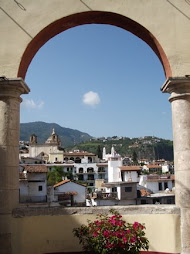
This post needed a picture so here is the view from underneath the crossing tower of York Minster.

I have been away from the blog for awhile so that I could write some real academic prose.  More recently, the Passengers have been away from Singapore for awhile thanks to visitors and visits.  We have managed to fit in Indonesia, Britain, America, and Britain once more.  Half of us are again in Singapore because work can't wait, but we plan to be reunited soon.  Fortunately, the time away has been refreshing, productive, and remarkably unencumbered by volcanic activity.  Hopefully, more posts will follow this one, but actual schoolwork, like simmering volcanoes, remains a credible threat.

09 March 2010

Driving to Distraction

Americans live in a big country.  We travel serious distances and practically live in our cars, which leads to some very strange behaviors.  From the Key West Citizen in Florida:
Florida Highway Patrol troopers say a two-vehicle crash Tuesday at Mile Marker 21 on Cudjoe Key was caused by a 37-year-old woman driver who was shaving her bikini area while her ex-husband took the wheel from the passenger seat.

08 March 2010

FDIC Insured

Don't Panic.  Your bank has failed.

I tried to log in and check up on my savings account yesterday and was immediately welcomed by the message shown above.  One of the US bank regulators, the much maligned Office of Thrift Supervision, had declared the bank failed, shut it down, and put it into receivership.  

Fortunately, this means only mild inconveniences for me.  Firstly, I had only a few hundred dollars at this bank.  I opened an account here because of a good offering on interest rates plus frequent flier miles, but once those interest rates came down I moved most of that money elsewhere, just one individual in the hot money supply.  No one is winning that game these days

However, retail banking customers in the United States are almost always insured against failure.  The Federal Deposit Insurance Corporation, colloquially FDIC and sometimes Fi-Dec, has guaranteed savers' money since 1934.  The institution insures accounts up to $250,000 at participating banks for each customer.  Banks, rather than taxpayers, put up premiums and fees that the become the purse out of which savers are made whole.

When a bank becomes insolvent the FDIC swoops in over the weekend and closes down operations in an orderly manner before Monday morning. The FDIC has been exceptionally busy and perhaps overworked in this recession.  Around 140 banks had to be closed in 2009, and another 26 have been named so far this year with another three weeks left in the first quarter.  But I, for one, am thankful for the assurance.

05 March 2010

"Signs, Signs, Everywhere the Signs"

New York's Penn Station is as charming and welcoming as it is navigable.  This diagram shows the Long Island Railroad platforms deep underground.  Passengers connecting from LIRR to a NJ Transit or Amtrak train should head for the shaded are at the top left.  However, this map doesn't show any doorways or stairs there.  Trust me, the building doesn't feel any simpler in practice.  Image from MTA website.
The online magazine Slate began a multi-part series this week on signs.  The articles focus on how people use signage to find their way around locations.  Author Julia Turner says that the great increase in travel, mostly by air, has spurred architects and planners to think carefully about how they direct people, many of them on a tight schedule and unfamiliar with the local language, to move to their desired destinations.  In some circumstances, like driving at speed down the highway, quality signs can be a matter of life and death.  

The mobility of the post-War era explains why signage has proliferated and improved, but to me the real interest is in how these systems are bettered.  Placards on the wall represent only one example of the indicators by which we navigate.  Humans can also sense environmental zones, which is why we go to a building's high-roofed multi-story lobby to look for the elevators.  That big lobby also serves as a mental centerpoint when walking around the rest of building, whether or not it is actually centrally positioned.  Also a sign can't help if it hangs in the wrong place or contains no relevant information.  This is why hospitals have big red exterior drive-thrus for patients needing emergency treatment and no banners and arrows outside for those visiting the dentist on the twelfth floor.  For these reasons specialists in directions do not refer to their craft as "sign-making" but "wayfinding."

Slate's series does more than satisfies my appetite for visual analysis, but it chooses New York and London as two of its test cases!  Why is Penn Station so confusing?  How can anyone get from A to B in London town without an A to Zed?  The Legible London project might make it possible.  Bonus: The pilot program(me) by the Mayor's office follows the incremental testing and rollout methods advocated by Michael Blastland in Analysis last week on BBC Radio 4.  Art, design, podcasts, Anglo, American  -- trifecta!  Did I mention I am not the mathematical one in this couple?

 
One of the Legible London signs on Oxford Street.  Image from wayfinding firm Applied Information Group (AIG).

Animation Nation - Take 2

Small steps brought The Secret of Kells to New York.  Image from this New York Times slideshow.

Back in October, I wrote about attending Singapore's animation festival and seeing The Secret of Kells (sound alert), a movie directed by 33-year-old Irishman Tomm Moore.  Well, Moore's secret is now out in a big way.  The Secret earned a write-up in the New York Times on Tuesday, a major place in the New York International Children's Film Festival this month, and  a wider opening in Manhattan from today.  It also has a chance to shine at the Oscars as a nominee in the best animated feature category.  The NYT story focused only a bit on the historical underpinnings of the film and its aesthetic that I enjoyed so much.  Check out the paper's separate review to read about the distinct stylings of the animation.  Instead the big debut piece devoted most of its column inches to the word-of-mouth marketing effort employed by the film's distributors, both worldwide and in America, that earned it an Academy Award nomination.

The Secret's nomination puts it in competition with the very good films Up and Coraline.  It has only a very modest chance of success against these films, but the nomination should be a great encouragement to smaller animation outfits throughout the world.  Its inclusion loosens up the nominations monopoly usually held by Disney/Pixar.  Plus another heavyweight studio 20th Century Fox debuted Fantastic Mr. Fox to great acclaim and their own Oscar nomination this year.  The overall quality among this year's nominations suggests animation's widening talent pool should give filmgoers even more quality features to relish, even as the past decade has proven so good.  

New Yorker readers,  give The Secret of Kells a try, and if you want to be charmed by the early work of another great animation director, seek out Brad Bird's Iron Giant from 1999.