25 September 2009

The Staffordshire Hoard

An especially deep plowing is suspected to have brought the buried treasure close to the surface this year.

An unemployed man with a metal detector in July unearthed the largest cache of Anglo-Saxon artifacts ever found in Britain. The lucky strike includes over 1500 objects, mostly of precious metals and gemstones, probably buried around AD 700 for safekeeping. Word of the discovery only went out today with an unveiling at the Birmingham Museum and Art Gallery. Since Terry Herbert first notified the portable antiquities scheme professional archaeologists have been working covertly in the field where the objects were found to try uncover more information about what took place there 1300 years ago. The exact location still remains secret and the Home Office is overseeing the excavations to keep out would-be looters.

Many of the precious objects were used to decorate swords, probably the spoils of warfare around the Midlands kingdom of Mercia. (from the BMAG flickr stream)

The overwhelming collection has been designated as "treasure" and thus belongs to the State. However, British museums will bid to take possession of the hoard. The final price will be divided between Mr. Herbert and the farmer who owns the field in which the find was made. These objects will keep curators, archaeologists, and art historians busy for years conserving and inspecting each piece for new historical insights into the so-called Dark Ages. The museum has great images of some of the treasure on flickr. The Guardian also has a slideshow, as does The Times.
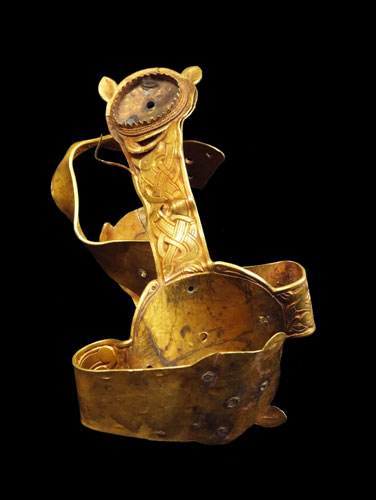
The twisted state of this cross decorated with interlace lead researchers to surmise it was plundered as gold booty. I assume the item was removed from the cover of a gospelbook.
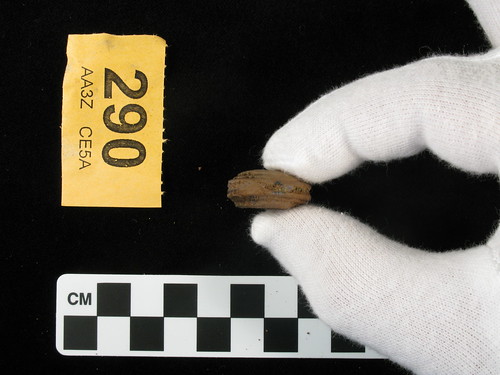
Small, precious items allowed the ruling classes of Europe to carry and secrete their wealth (from the BMAG flickr stream).

20 September 2009

York Beer & Cider Festival


Today was my first full day in York. Fortunately, my time in the North coincides with the York Food and Drink Festival. This weekend CAMRA (Campaign for Real Ale) held a gathering at the racecourse. A serious crowd gathered around the grounds and inside the tents to taste beers and ciders from all over Britain.


My samplings from this afternoon from Yorkshire outfits included Ryedale Best by Cropton brewery, Sabbatic Ale from Great Heck, and Muston Scarecrow made by East Coast Brewing Co. in Filey. Another personal highlight was the Copy Lane Stout offered by Stables in County Durham. Plus, the festival featured a choice handful of food vendors to explore.


The three words every man longs to hear, "Fresh Pork Scratchings."

Then, up from among the carnival rides next door came six hot-air balloons in time for a sunset voyage.

Another high-flying venture from Sir Richard Branson.

Hard to beat.

18 September 2009

Euston Arch Trust

The Euston Arch, designed by Philip Hardwick and enginneered by Charles Fox, welcomed visitors to the station for nearly 125 years.

Wednesday featured a visit to an event promoting the Euston Arch Trust. The organization is gathering support to rebuild the monumental entrance that marked the London terminus of the London and Birmingham Railway since 1837. The Greek Revival propylaeum stood to the north of Euston Road until 1961, when it was unfortunately demolished. An iconic London building was lost, but the outrage that ensued galvanized modern efforts to preserve Britain's architectural treasures. The grand Victorian edifice of St Pancras Station next door was one of the principal beneficiaries. The course of New York's preservation movement led down a very similar valley with the loss of the Penn Station providing the impetus needed to retain Grand Central Terminal.

A column fragment from the Euston Arch was removed from the Prescott Channel in 1994 for the BBC television show One Foot in the Past.

Interestingly, the remains of the destroyed arch were finally rediscovered in 1994 at the bottom of the Prescott Channel, an industrial canal in East London. Historian Bob Cruickshank managed to unwind the story of how Bob Cotton, an engineer at British Waterways, procured the stone from the demolition site to patch a hole at the bottom of the canal. About thirty pieces of stone have now been retrieved.

Efforts to rebuild the arch have waxed and waned for years, but interest has gathered since National Rail announced a major redevelopment of Euston Station in 2007. The trust is now campaigning to make the arch the landmark feature of the new facility.

Joe Robson created this rendering of the proposed arch on its new location along Euston Road.

16 September 2009

Society of Antiquaries, London

The two galleries high above the main room can make finding books an adventure.

Today has been a work day using the library at the Society of Antiquaries. Founded in 1707, the society studies the remains of Britain's, and sometimes the wider world's, past. Its quarters off of Piccadilly and inside Burlington House, also home of the Royal Academy of Arts, are frequented by (mostly) men interested in archaeology, architectural history, genealogy, numismatic, and other arcane pursuits. The scholars may look as dusty as the books, but the atmosphere is warm, and the collection is outstanding. Many of the books date to the eighteenth and nineteenth centuries. The stately setting and the vast expanses of shelves make the library a great place to read and explore. I took these pictures a couple years ago, but I assure you the place has not changed.

The main room of the library.

The spiral staircase in the corner leads from the first gallery up to the second.

The Society's rooms overlook the courtyard of Burlington House. In 2006 Damien Hirst's 35-foot bronze Virgin Mother welcomed visitors to the Royal Academy's Summer Exhibition.

15 September 2009

Anniversary, Rottingdean

The town of Rottingdean lies in a valley where the South Downs meet the English Channel.

The Passengers have been married a whole year now, plus a few weeks spent getting around to finishing this post and loading the photos. For our paper anniversary we made a pilgrimage back to the south coast of England where we were married at St. Margaret's church in Rottingdean. We spent two nights in this postcard village where Rudyard Kipling (and H's grandmother) used to live. The day included a walk across the south downs overlooking the sea and a very relaxed dinner of fresh scallops and langoustines at Riddle & Finns in nearby Brighton. Here are some images to show what makes the village such a pleasant retreat.

St. Margaret's church in the center of the village. Parts of the building pre-date William the Conqueror. The house immediately in front of the church was Kipling's home, The Elms.

Overlooking the downs.

A Tudor-era (16th Century) cottage near the village green.

The Kipling Gardens were created in 1983 as a means to preserve part of the village's historic core.

Pub Lunch in Farringdon

The Passengers took H's parents for an enjoyable outing in London last week. We wandered the streets around Farringdon Station and Smithfield Market. I'll provide more photos later of the area's architectural delights. The highlight of the day was lunch at the Fox & Anchor, an impeccably equipped gastropub off Charterhouse Square run by the boutique hoteliers responsible for the nearby Malmaison Hotel. The snug dining nooks inside the pub have been clad in dark wood and warm lights glint off the pewter beer tankards. Add oysters, homemade pork pies, and a syllabub dessert and you have a classic of British hospitality and cuisine. Also I love the historic art deco building.

The Fox & Anchor is also an inn with six rooms available.

Drinkers have long benches and all the day's papers at the bar.

Diners sit in the back rooms and contemplate the pie of the day.

04 September 2009

Lantau Buddha, Hong Kong

All is still crazy in Passenger Land. We landed yesterday at Heathrow for about 10 days of R&R at H's family home. While she sleeps off the flight and the stress of closing down our New York apartment, I will provide more belated images from Hong Kong.

The Passengers ventured off Hong Kong Island on a journey to the Po Lin monastery on Lantau, one of the many islands in the Pearl River Delta within the Hong Kong Special Administrative Region. Despite the July heat and soaring hills, the journey was not difficult thanks to a load of technological wizardy. The Tung Chung terminus of the rapid, efficient MTR brings visitors to the brand-new Ngong Ping cable car.


The gondolas wind up and over a sweeping landscape of rugged, iconic hills rising out of the South China Sea. I would love to come back with hiking boots and a picnic for another trip. The ride brings thousands of tourists and locals up to a recreated Chinese village, built by the cable car company and filled with mulitmedia exhibits, souvenir stands, and a Starbucks. The Po Lin monastery nearby hosts the real attraction: a 112-foot bronze sculpture of the Buddha seated on a lotus throne. This is not an historical attraction. The statue was finished in 1993, and the two locations enjoy a mutualistic, capitalist relationship. The monastery welcomes devotees and lures pilgrims with its gigantic statue, while the Ngong Ping provides spectacular transportation and attends to visitors' more base desires with tchotchkes and gelato in the village. Win-win.

Weekenders use parasols to ward off the sun as they walk from the village to the monastery.

Warning: crowds and stairs ahead. The flag of Hong Kong SAR appears at left.

A statue of a devotee making an offering.

The walkways around the Buddha statue provide stunning views of the South China Sea. High-speed ferries can be seen streaking west to Macau. The former Portugese trading post is now a gambling/party mecca.